
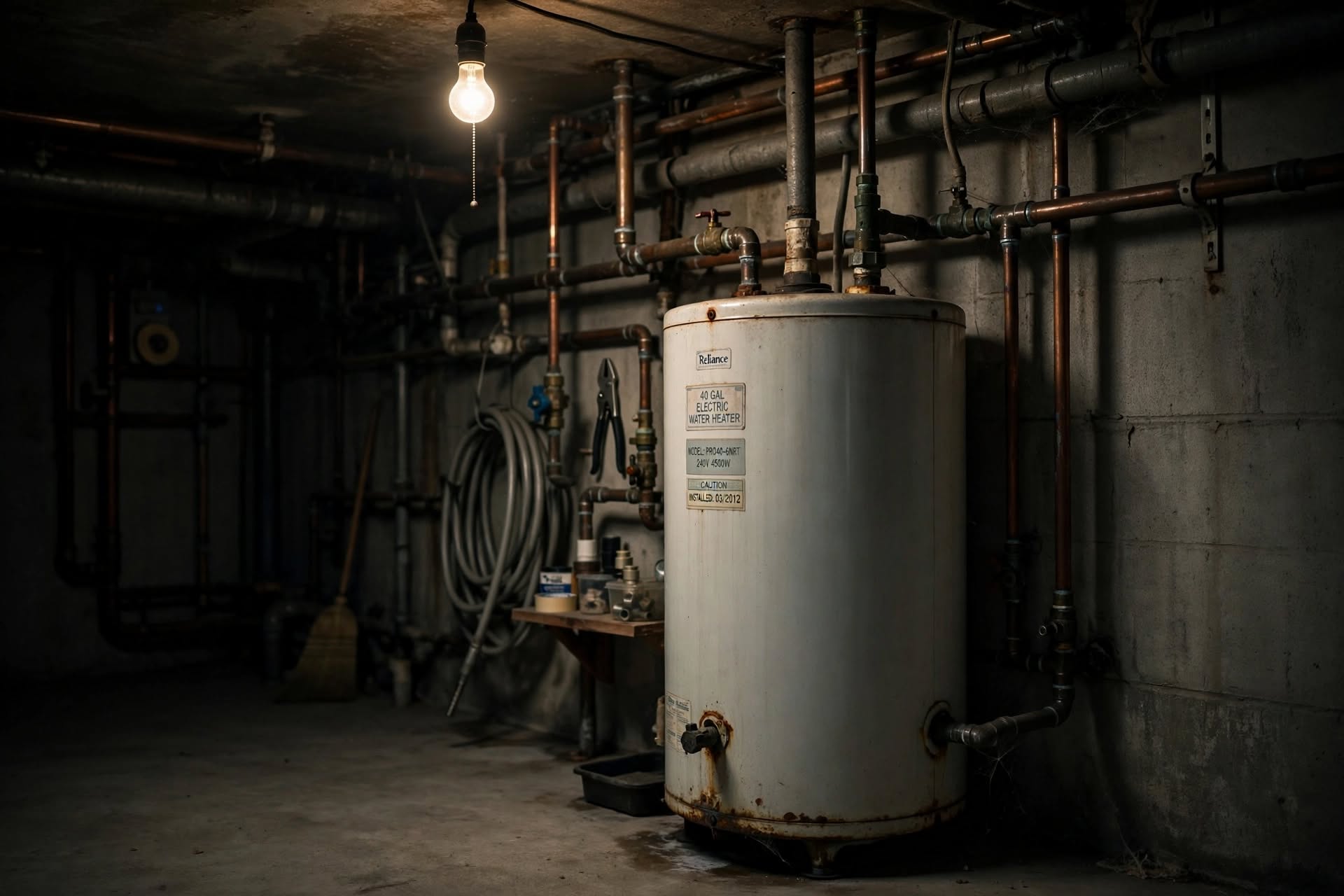
The short answer: a standard tank water heater lasts 8 to 12 years. A tankless (on-demand) unit lasts 15 to 20 years. But “lasts” and “works well” aren’t the same thing — here’s what actually happens as they age, and the warning signs that yours is on borrowed time.
Tank vs. tankless: the real lifespan gap
Tank heaters constantly heat and reheat 40–50 gallons of water, which wears the tank lining and builds sediment. That’s why 8–12 years is the realistic range, with 10 as a good planning number. Tankless units only heat water when you need it, so there’s far less wear — 15 to 20 years is typical, and some go longer with annual descaling.
Check the age first
Find the manufacturer’s label on your unit — the serial number usually encodes the install date (the first four digits are often month/year). If your tank unit is past year 8, start planning. Past year 10, you’re on bonus time.
5 warning signs yours is failing
1. Rusty or discolored hot water. Rust in hot water only (not cold) usually means the inside of the tank is corroding. This one is serious — it can precede a tank failure.
2. Rumbling, popping, or banging. That’s sediment hardened at the bottom of the tank. The burner is essentially cooking through a layer of rock, which overheats the tank and shortens its life.
3. Water pooling around the base. Any moisture at the bottom of a tank heater deserves immediate attention. Small leaks become big leaks, and tank failures don’t schedule appointments.
4. Inconsistent temperature. Hot water that runs out faster than it used to, or swings between hot and lukewarm, signals a failing heating element or heavy sediment buildup.
5. Your energy bill crept up. Sediment forces the unit to work harder for the same hot water. If nothing else changed but the bill rose, the heater is losing efficiency.
Repair it or replace it?
A new heating element or thermostat on a 5-year-old unit? Usually worth fixing. The same repair on a 9-year-old tank? You’re likely throwing money at a unit that’s about to fail anyway. The general rule: if the repair costs more than half of replacement and the unit is past 8 years, replace it.
Don’t guess — our calculator applies the 50% rule and the 8-year age limit to your exact situation and gives you a clear repair it or replace it verdict.
→ Should I repair my water heater or replace it? Get your verdict
This article is educational only — not professional plumbing advice. Water heaters involve gas lines, high voltage, and scalding water; when in doubt, call a licensed plumber.